
In a wide-ranging conversation for Mobility First, Dr. Suk explained why mobility is not simply the result of recovery — it is a critical part of recovery.
The Surgeon
Thirty Years in the Business of Restoring Movement
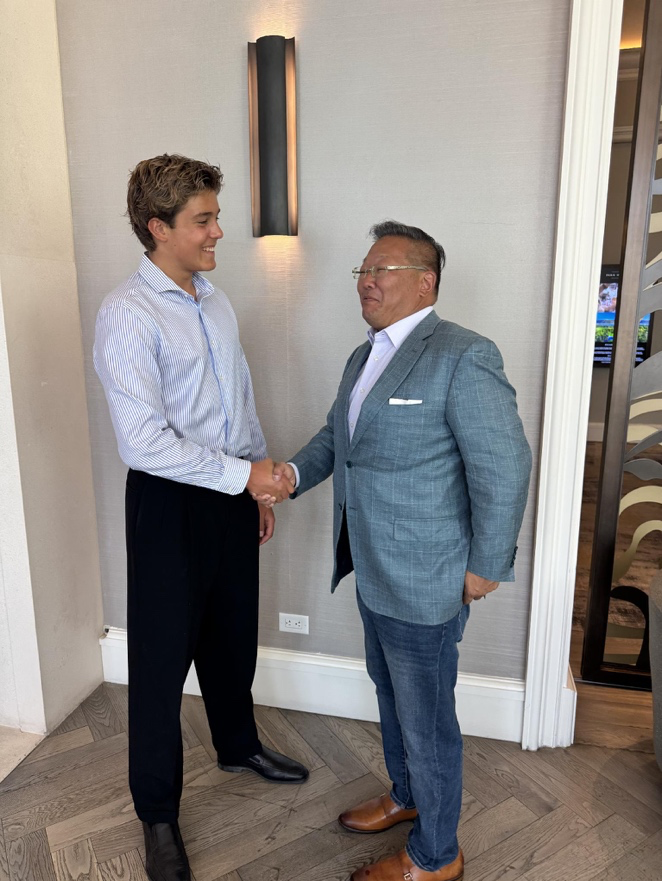
Dr. Michael Suk has spent three decades in the specialty of medicine devoted to the broken bodies that arrive in emergency rooms after falls, car accidents, and sports injuries: orthopedic trauma. But ask him to describe his specialty, and he doesn't start with hardware or surgical technique.
"Orthopedics is really a specialty that's designed around the restoration of movement," he says. "It's a quality-of-life specialty. We do things, particularly in trauma, that actually save lives, but at the end of the day, we work on patients to give them a better quality of life. And the most important quality is really their ability to function, their ability to really get on with their daily living, and that includes movement and mobility."
Dr. Suk has carried that philosophy well beyond the operating room. He is the former chair of the American Medical Association Board of Trustees, current chair of The Joint Commission Board of Commissioners, and a former chief physician officer and academic department chair at Geisinger Health System, where he helped pioneer the nation's first lifetime warranty on total joint replacement. He is also a White House Fellow, an international educator, and, depending on which room he's standing in, either the surgeon fixing your hip or the person setting national policy on how hospitals are held accountable for the quality of that fix.
Who Is Dr. Michael Suk?
- Fellowship-trained orthopedic trauma surgeon, 30 years in practice
- MD, JD, MPH, MBA, FACS, FACHE
- Trustee and Former Chair, American Medical Association Board of Trustees
- Member, American College of Lifestyle Medicine Board of Directors
- Chair, The Joint Commission Board of Commissioners
- Former Chief Physician Officer & Musculoskeletal Institute Chair, Geisinger Health System
- White House Fellow, U.S. Department of the Interior
- International educator and national healthcare leader in value-based, mobility-focused care
It is a resume built for boardrooms. But in conversation, Dr. Suk keeps returning to the specific moment when a family is told their loved one has a broken bone and has to decide what happens next.
When a Bone Heals but a Life Doesn't
Ask most people what happens after a broken bone, and they'll tell you: it heals, or it doesn't. Dr. Suk says that framing misses the more important half of the story.
"Bones will heal when they're put into the right place and under the right biological conditions to do so," he explains. "But what happens after they heal is critically important, because you can have somebody who has a broken bone that heals perfectly well, but if they stay in bed the rest of their life, then you've got only part of the solution."
That distinction matters most for older patients, whose families are often told to keep a loved one off an injured leg for six, seven, or even eight weeks. It sounds like caution. Dr. Suk describes what it actually does to the body.
"Patients who become immobilized after injury can lose muscle mass and strength remarkably quickly, particularly older adults."
— Dr. Michael Suk
That concern is central to how Dr. Suk and other trauma surgeons now approach fracture care. Immobility, he says, isn't a neutral holding pattern while biology does its work; it is actively working against the patient.
"I think those things can be detrimental in terms of the overall condition of the patient," he says, "which is why orthopedic surgeons, and especially trauma surgeons, try to take all of that into account and, when appropriate, make earlier decisions to fix things, so that we can actually allow them to be more mobile more quickly."
The Decision
The Real Calculation Behind Every Fracture
Not every broken bone needs surgery, and Dr. Suk is careful to explain how that decision actually gets made. Fractures that disrupt a joint, knocking it out of what he calls its "anatomic position," carry a high risk of long-term arthritis and disability if left misaligned, and therefore tend to get fixed. So do fractures in weight-bearing bones, that are critical to standing and walking. Beyond that, the calculus shifts to the patient in front of him.
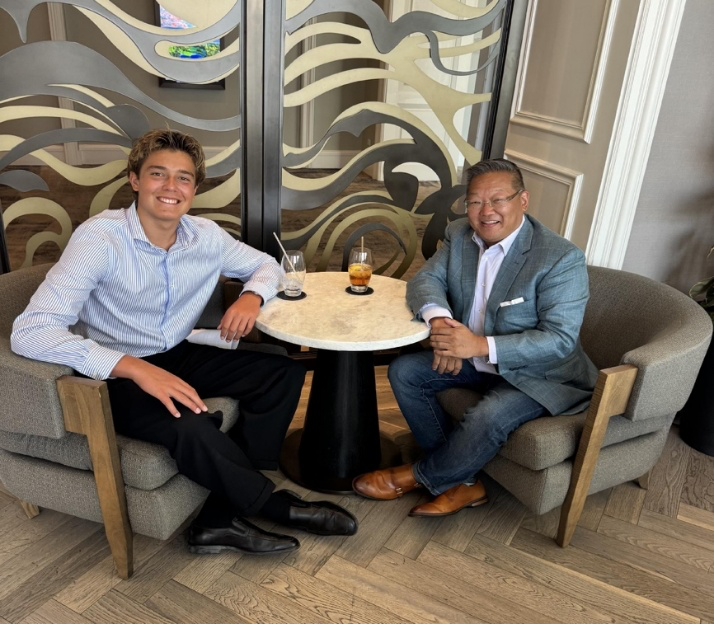
Families, he says, often assume that advanced age alone rules out surgery. It doesn't. "Age is just one factor of a number of things," Dr. Suk says. What matters more is whether a patient carries additional risk, such as uncontrolled diabetes, high blood pressure, a history that raises the overall medical risk from surgery and anesthesia. "As you get older, it gets higher," he says of age's weight in the decision, "largely because all of those things tend to happen more frequently as you get older. But I don't think that there is an age cutoff from which you would say it's not appropriate for surgery."
A Patient at 100
"I've operated on patients who are over 100 who have a hip fracture, because we want them to get out of bed. It's really gratifying when you have someone who's broken their hip at age 100 and they come back for their postoperative visit at 101 — and they can still walk."
That last detail — that they can still walk — is, in Dr. Suk's telling, the entire point of operating on a fracture in the first place. "Fixing those earlier allows you to do mobility within the bed, also get the patient out of bed," he says, "which helps reduce complications involving the lungs and cardiovascular system. It also helps to reduce the overall decline associated with prolonged immobility."
He says, "that's why surgeons now operate on the overwhelming majority of hip fractures in medically appropriate patients rather than treating them conservatively unless there's a real reason they can't."
What Every Family Conversation Should Sound Like
For families facing that decision, Dr. Suk offers a simple frame: ask what happens if we don't operate, and ask what happens if we do. "The conversation is all about, if we don't do this, what happens as a result? If we do fix this, can we stop those things from happening? Then you weigh the risks and benefits of anesthesia and things like that, and you make an informed decision."
In his experience, many families conclude that surgery offers the best opportunity to restore mobility and independence. "By far the vast majority of the time, where the conditions are okay, patients and families are like, 'Let's go ahead and get this thing done.' They want their family members walking again."
"When surgery isn't appropriate initially", Dr. Suk says, "it doesn't mean surgery will never be appropriate, and the decision should be revisited if the patient's condition changes. Ultimately, every treatment decision should reflect not only the fracture itself, but also the patient's overall health, goals, and values"
Redefining Success
The Next Decade: Getting Ahead of the Fracture
When asked about what excites him most about the future of his field, Dr. Suk doesn't point to a new implant or surgical technique. He talks about prevention, specifically years before a fracture ever happens. "The most exciting stuff that's happening is on the prevention side," he says. "We have advanced ways that we detect whether bones are getting weaker, and we have new medications and treatments that are happening all the time to help make bones stronger."
This is most important in falls, which Dr. Suk calls a challenge that the field still needs to solve. "Older people fall for many reasons, including impaired balance, muscle weakness, vision changes, neurologic diseases and environmental hazards," he says, "and when they fall, they get injured, and then it starts a whole spiral of inactivity." Breaking that spiral before it starts — through better balance screening, stronger bones, and earlier intervention — is, in his view, where orthopedic trauma is headed next.
Healing the Whole Person
Mobility First's founding belief is that healing a bone is only part of healing a person. Asked directly what that statement means to him, Dr. Suk didn't hesitate.
"I think it's a hundred percent right. Broken bones will heal on their own, or they heal with intervention. But if you don't take the whole person into account, you've got a nicely healed bone in someone who may ultimately not be able to do anything else. And that's probably not the best way to look at the whole person."
— Dr. Michael Suk
Interview conducted by Nick for Mobility First. This conversation has been condensed and lightly edited for clarity.